



Why Train Operating Companies Are Increasing Investment in Body-Worn Cameras
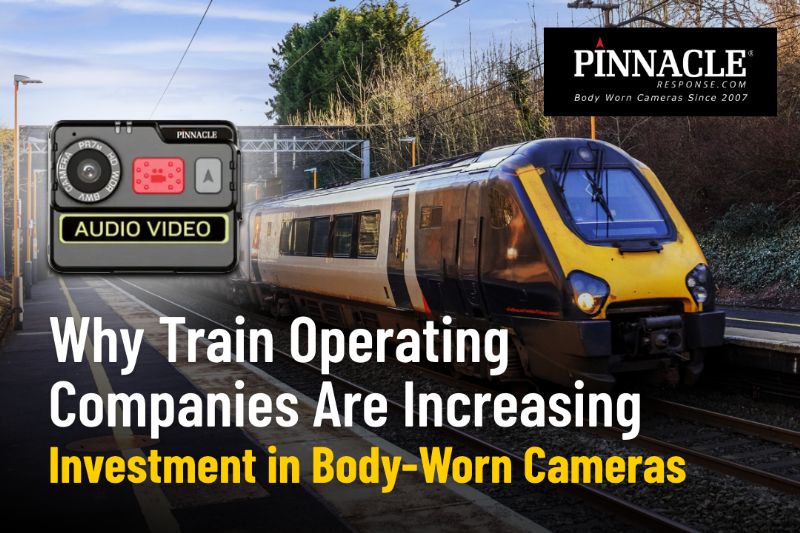
Incidents of abuse and anti-social behaviour towards rail staff have been steadily increasing across the UK. Frontline teams — including conductors, revenue protection officers, station staff, and security personnel — frequently deal with challenging and high-pressure situations.
In response, many Train Operating Companies (TOCs) are strengthening their approach to staff safety and passenger protection. One recent example is East Midlands Railway’s decision to double the number of body-worn cameras issued to staff as part of its “No Excuse for Abuse” campaign.
This move reflects a wider industry trend: body-worn video is becoming an essential safety and accountability tool across the rail network.
The Growing Challenge for Rail Operators
Rail staff operate in dynamic public environments. They are responsible for:
- Managing passenger flows
- Handling ticketing and fare disputes
- Responding to service disruption
- Enforcing safety regulations
- Dealing with anti-social behaviour
While the vast majority of interactions are positive, incidents of verbal abuse, threats, and aggression are a real concern. These situations not only affect staff wellbeing but can also disrupt services and impact passenger experience.
Operators are therefore looking for practical, preventative solutions — not just reactive measures.
Operational Pressures and Risk Factors
Rail environments are unpredictable, and staff are often required to make quick decisions in public-facing situations where tensions can escalate rapidly.
How Body-Worn Cameras Help Deter Abuse
One of the most significant benefits of body-worn cameras in the rail sector is deterrence.
When individuals know that interactions are being recorded, behaviour often changes. The presence of a visible camera can:
- De-escalate tense situations
- Reduce aggressive behaviour
- Prevent false allegations
- Encourage professionalism on all sides
Creating a Safer Working Environment
For TOCs, this creates a safer and more controlled working environment for staff while also reassuring passengers that incidents will be handled transparently.
Supporting Accurate Incident Reporting
In situations where incidents do occur, body-worn video provides an objective and time-stamped record of events.
This is critical for:
- Investigating complaints
- Resolving fare disputes
- Supporting prosecutions
- Defending staff against false claims
Reducing Investigation Time
Without video evidence, investigations often rely on conflicting witness accounts. Body-worn cameras remove ambiguity and significantly reduce the time required to resolve cases.
For rail operators, this means faster investigations, reduced administrative burden, and stronger evidential support when required.
Real-Time Capability and Modern Technology
Advancements in body-worn video technology are also enhancing operational capabilities.
Modern devices can now offer features such as:
- High-definition video capture
- Enhanced low-light performance
- Pre-record functionality
- Secure encryption
- 4G live streaming for real-time situational awareness
Live Monitoring and Response
Live streaming in particular is becoming increasingly valuable for rail operations. In serious incidents, control rooms can gain immediate visibility of a situation, enabling faster decision-making and coordinated responses.
This capability supports not just staff safety, but overall network resilience.
Secure Digital Evidence Management
Capturing footage is only part of the solution. Managing it securely is equally important.
Rail operators must ensure that video evidence:
- Is stored securely
- Maintains evidential integrity
- Is accessible only to authorised personnel
- Meets legal and compliance standards
DEMS and Compliance
A robust Digital Evidence Management System (DEMS) allows footage to be uploaded, tagged, searched, and shared securely. Features such as encrypted storage, audit trails, digital signatures, and configurable retention policies are essential for maintaining compliance and protecting sensitive data.
For TOCs, this ensures a complete camera-to-court solution that supports investigations without compromising data security.
Protecting Staff and Reassuring Passengers
Beyond deterrence and evidence, body-worn cameras play a broader role in shaping public perception.
Passengers want to feel safe. Staff want to feel supported. Operators want to demonstrate accountability.
Building Trust Through Visibility
Body-worn video helps achieve all three.
By visibly investing in staff protection measures, rail operators send a clear message: abuse will not be tolerated, and safety is a priority.
A Long-Term Investment in Safer Rail Travel
The decision by operators such as East Midlands Railway to expand their use of body-worn cameras reflects a strategic shift within the rail sector.
Body-worn video is no longer viewed as optional equipment. It is becoming standard frontline technology.
Future-Proofing Rail Safety
As the rail industry continues to focus on safety, service quality, and accountability, investment in reliable, secure, and purpose-built body-worn camera solutions will remain a key component of that strategy.
For Train Operating Companies looking to enhance staff protection, reduce false complaints, and strengthen evidential processes, body-worn video is proving to be a powerful and practical solution.
Contact and Further Information
If you would like more information on how Body Worn Cameras can help your workplace then contact us for more information.


(4).png)


.jpg)
.png)
.png)

.png)

.png)