



The Hidden Risks in Waste & Recycling Work—and How Body Cameras Help
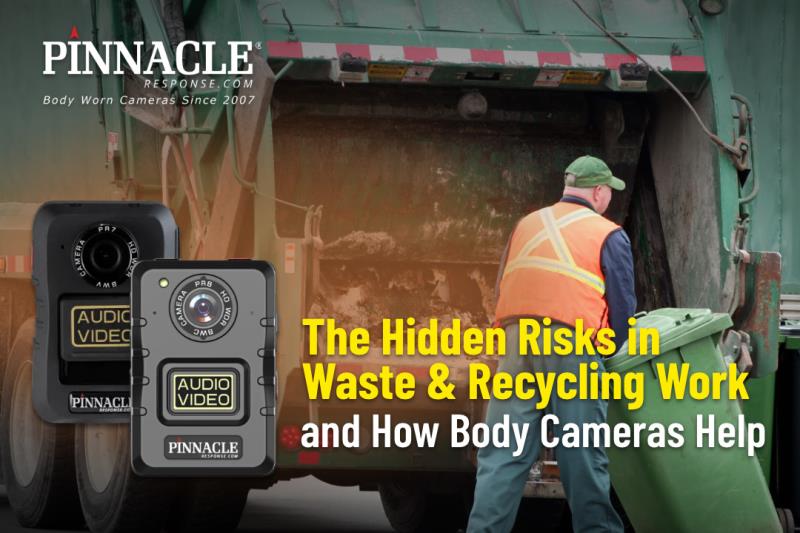
Waste and recycling teams provide one of the most essential public services in the UK. Every day, frontline workers keep communities clean, manage complex collection routes, handle recyclable and hazardous materials, and respond to public queries and complaints.
Despite the importance of this work, the risks faced by waste and recycling staff are often overlooked.
From roadside confrontations and resident disputes to false claims, lone working, and health and safety concerns, waste teams operate in fast-moving environments where incidents can happen without warning.
Body-worn cameras are increasingly helping waste and recycling organisations protect staff, improve reporting, and create a safer working environment.
A public-facing role with real frontline risk
Waste and recycling work often involves direct interaction with residents, businesses, contractors, and members of the public.
Many of these interactions are routine. However, disputes can arise over issues such as:
- Missed collections
- Contaminated recycling
- Bin placement
- Access restrictions
- Commercial waste responsibilities
- Fly-tipping investigations
- Enforcement activity
- Damage claims
- Noise or timing complaints
These situations can become tense, especially when staff are required to explain rules, refuse collection, report non-compliance, or challenge unsafe behaviour.
For teams working in public spaces, on roadsides, or across large routes, there may be limited immediate support available. Body-worn video provides an added layer of protection and reassurance.
Deterring abuse and aggressive behaviour
Waste and recycling teams can be exposed to verbal abuse, intimidation, or confrontational behaviour while carrying out their duties.
The visible presence of a body-worn camera can help reduce this risk.
When people know an interaction may be recorded, they are often more likely to moderate their behaviour. This can help de-escalate difficult situations and create a calmer environment for staff and residents alike.
For workers who may be operating early in the morning, in isolated locations, or across wide geographic areas, this deterrent effect can be especially valuable.
Protecting staff from false claims
Waste and recycling services can also be affected by false or disputed claims. These may include allegations of staff misconduct, damage to property, missed collections, or inappropriate behaviour during public interactions.
Without clear evidence, these complaints can be difficult and time-consuming to investigate.
Body-worn cameras provide an objective record of events. Footage can show what happened, when it happened, who was present, and how staff responded.
This helps managers resolve disputes quickly and fairly, reducing the pressure on both staff and operational teams.
Supporting accurate incident reporting
In busy waste and recycling operations, incidents need to be recorded clearly and consistently. This may include public aggression, near misses, unsafe behaviour, access issues, contamination disputes, road safety concerns, or damage to vehicles and equipment.
Body-worn video supports more accurate reporting by capturing evidence at the point of interaction.
Rather than relying solely on written notes or memory, staff and supervisors can review footage to understand the full context of an incident.
This can help organisations identify patterns, improve training, adjust routes, strengthen procedures, and respond more effectively to recurring issues.
A safer approach to enforcement and compliance
Waste and recycling teams are often involved in activities linked to enforcement and compliance. This may include investigating fly-tipping, challenging commercial waste misuse, documenting contamination, or supporting environmental enforcement teams.
In these situations, body-worn video can provide valuable evidence.
Footage can help demonstrate that staff followed the correct process, communicated clearly, and acted professionally. It can also support further action when offences or aggressive behaviour occur.
For local authorities and waste contractors, this creates a stronger evidential foundation and supports more transparent decision-making.
Why PR7 and PR8 are suited to waste and recycling environments
Waste and recycling work can be physically demanding. Staff need equipment that can withstand real operational conditions, including rain, dust, movement, vehicle environments, and outdoor use.
Pinnacle Response body-worn cameras are designed for demanding frontline roles.
The PR7 is a strong fit for waste and recycling teams that need robust, reliable recording throughout the working day. Its rugged design, IP66 rating, long recording time, secure AES256 encryption, and simple one-swipe activation make it practical for high-pressure environments.
The PR8 adds advanced operational capability for teams that require real-time visibility. With 4G live streaming, 4G uploading, push-to-talk, and SOS functionality, the PR8 can help supervisors and control rooms support staff as incidents unfold.
This is particularly useful for lone workers, enforcement activity, high-risk routes, or teams operating across dispersed locations.
Real-time visibility for supervisors and control rooms
For larger waste and recycling operations, one of the biggest challenges is visibility. Supervisors cannot be everywhere at once, and staff may need support while out on routes or visiting difficult locations.
The PR8 helps address this by enabling real-time live streaming, allowing authorised personnel to see what is happening during an incident.
This can improve:
- Decision-making
- Staff support
- Incident escalation
- Supervisor awareness
- Response coordination
- Lone-worker reassurance
Instead of waiting for a report after an incident, managers can gain immediate context and respond more effectively.
Secure footage management with DEMS
Body-worn video is only valuable if footage is handled securely and properly.
Pinnacle Response cameras integrate with a Digital Evidence Management System, allowing organisations to upload, tag, review, retain, and share footage through controlled workflows.
DEMS supports:
- Secure storage
- Controlled access levels
- Automatic metadata tagging
- Full audit trails
- Retention management
- Search and review tools
- Evidence sharing
- Camera-to-court workflows
For waste contractors and local authorities, this helps ensure footage is managed professionally and in line with evidential requirements.
Improving confidence for frontline teams
Waste and recycling staff perform essential work in environments that are often challenging, time-sensitive, and highly visible to the public.
Body-worn cameras give teams greater confidence by ensuring there is an objective record when incidents occur.
This can improve morale, reduce anxiety around complaints, and reinforce a culture of professionalism and accountability.
Staff know they are supported. Managers know they have reliable evidence. Residents and service users know interactions are handled transparently.
A practical tool for a demanding sector
The risks in waste and recycling work are often hidden, but they are very real. Frontline teams face public interaction, operational pressure, safety challenges, and occasional confrontation as part of their daily roles.
Body-worn cameras help organisations manage these risks more effectively.
With rugged devices such as the PR7 and advanced real-time capability through the PR8, Pinnacle Response provides waste and recycling teams with practical, secure, and reliable technology built for demanding environments.
For organisations looking to protect staff, improve reporting, resolve disputes, and strengthen operational accountability, body-worn video is becoming an increasingly important part of modern waste and recycling services.
If you would like more information on how Body Worn Cameras can help your workplace then contact us for more information.
Tel: +44(0)2895320222
Email: sales@pinnacleresponse.com


(4).png)


.jpg)
.png)
.png)

.png)

.png)