



The 30 Seconds Before an Incident: Why Pre-Record Matters in Body-Worn Video
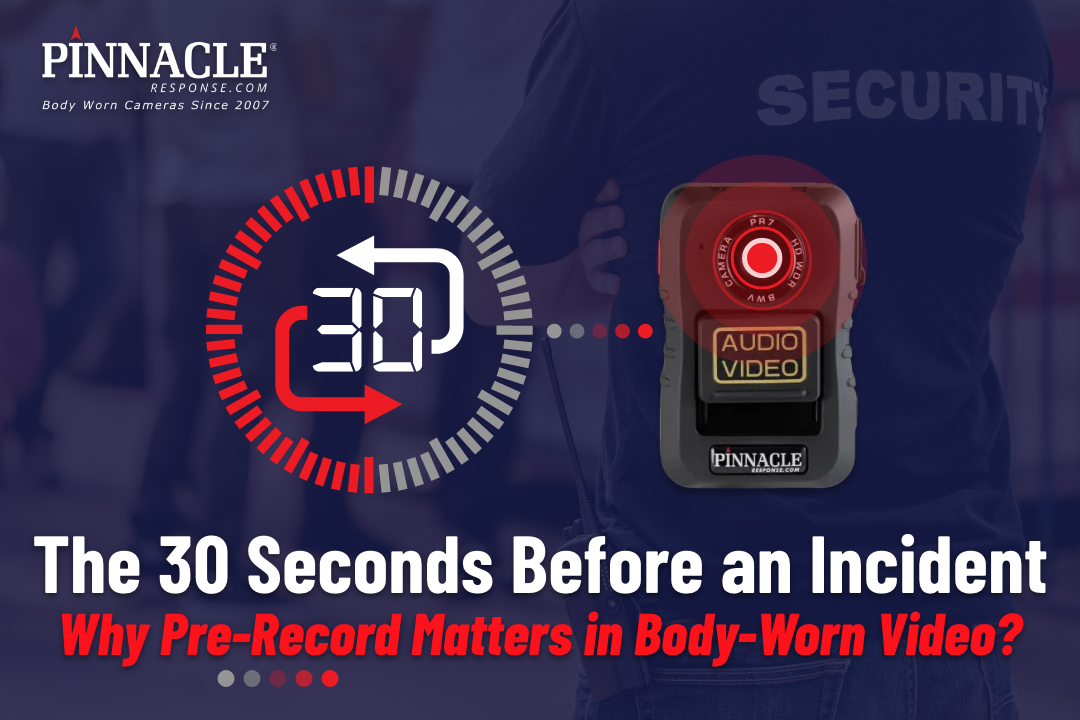
When an incident occurs, the moment a body-worn camera is activated may not always be the moment the incident actually began.
A difficult conversation may already have started. A customer's behaviour may have changed. An employee may have witnessed something that initially appeared routine before the situation escalated.
This creates an important question for organisations using body-worn video: what happened immediately before the record button was pressed?
This is where pre-record functionality can become particularly valuable.
What is pre-record?
Pre-record allows a body-worn camera to maintain a temporary buffer of video from immediately before recording is activated.
When the wearer begins recording, this preceding footage can be included as part of the recording, helping provide additional context around the events leading up to the activation.
Across the Pinnacle Response range, pre-record is available as part of the camera's recording functionality.
It is a relatively simple feature, but one that can make a meaningful difference when footage is subsequently reviewed.
1. Incidents rarely begin at the press of a button
Frontline employees make decisions constantly.
Most interactions will never require a body-worn camera to be activated. An employee might be answering a question, carrying out an inspection, dealing with a customer or performing another routine task.
But circumstances can change quickly.
A conversation can become confrontational. Someone may make a threat. An employee may notice behaviour that causes concern.
The wearer then makes the decision to begin recording.
Without pre-record, the footage naturally begins at that point. With pre-record enabled, the recording can also provide visual context from immediately before activation.
That distinction can be useful when trying to understand how an incident developed.
2. Context can be as important as the incident itself
A recording of the main incident may show what happened.
The moments preceding it can sometimes help explain how the situation reached that point.
Consider a dispute between an employee and a member of the public.
Footage beginning during the most confrontational part of the interaction could provide valuable evidence of what happened from that point onwards. However, preceding footage may provide additional context about the circumstances immediately before the camera was activated.
That can give managers reviewing the incident a broader picture rather than seeing only the point at which the situation had already escalated.
3. Frontline employees need to concentrate on the situation
Body-worn cameras should support frontline employees rather than create an unnecessary distraction.
During a rapidly developing incident, the wearer's immediate priority may be dealing with the situation in front of them.
They still need to activate their camera in accordance with their organisation's policies and procedures, but pre-record can provide an additional buffer around that decision.
It does not replace appropriate activation procedures or staff training.
Instead, it can complement them by helping capture the period immediately before recording begins.
4. Pre-record can help when footage is reviewed later
Body-worn video often becomes particularly valuable after an incident has finished.
A manager may need to establish what happened. An organisation may receive a complaint. An incident report may need to be reviewed. Footage may need to be retained as evidence.
In each case, understanding the sequence of events matters.
Having additional footage from immediately before activation can help those reviewing the recording understand the wider context surrounding the incident.
This is one reason organisations should consider camera functionality alongside the processes used to manage and review recordings.
5. Recording policy still matters
Technology alone does not determine when a body-worn camera should be used.
Organisations deploying body-worn video should establish appropriate policies covering areas such as when employees should activate cameras, how they should use them and how recordings are subsequently managed.
Pre-record should therefore be considered as part of the organisation's wider body-worn video strategy rather than as a substitute for clear procedures.
Employees should understand both how the functionality works and the policies governing its use.
A small feature that can provide valuable context
When organisations compare body-worn cameras, attention naturally turns to specifications such as recording time, image quality, durability, connectivity and security.
But smaller operational features can also make a significant difference.
Pre-record addresses a straightforward challenge: an incident does not necessarily begin at exactly the same moment an employee decides to start recording.
By capturing the period immediately before activation, pre-record can provide additional context and help create a more complete record of how an incident developed.
For organisations whose frontline employees regularly deal with unpredictable situations, that is a capability worth considering.
Body-Worn Video From Pinnacle Response
Pinnacle Response designs and manufactures professional body-worn camera solutions for organisations across the UK and beyond.
The Pinnacle Response camera range includes pre-record functionality alongside features designed for demanding frontline environments, with secure footage management available through Pinnacle Response's Digital Evidence Management System (DEMS).
To learn more about Pinnacle Response body-worn cameras and discuss the right solution for your organisation, contact our team today.
Tel: +44(0)2895320222
Email: sales@pinnacleresponse.com
- 30-seconds-before-incident


(4).png)


.jpg)
.png)
.png)

.png)

.png)