



Safer Construction Sites: How Body-Worn Cameras Support Staff and Strengthen Accountability
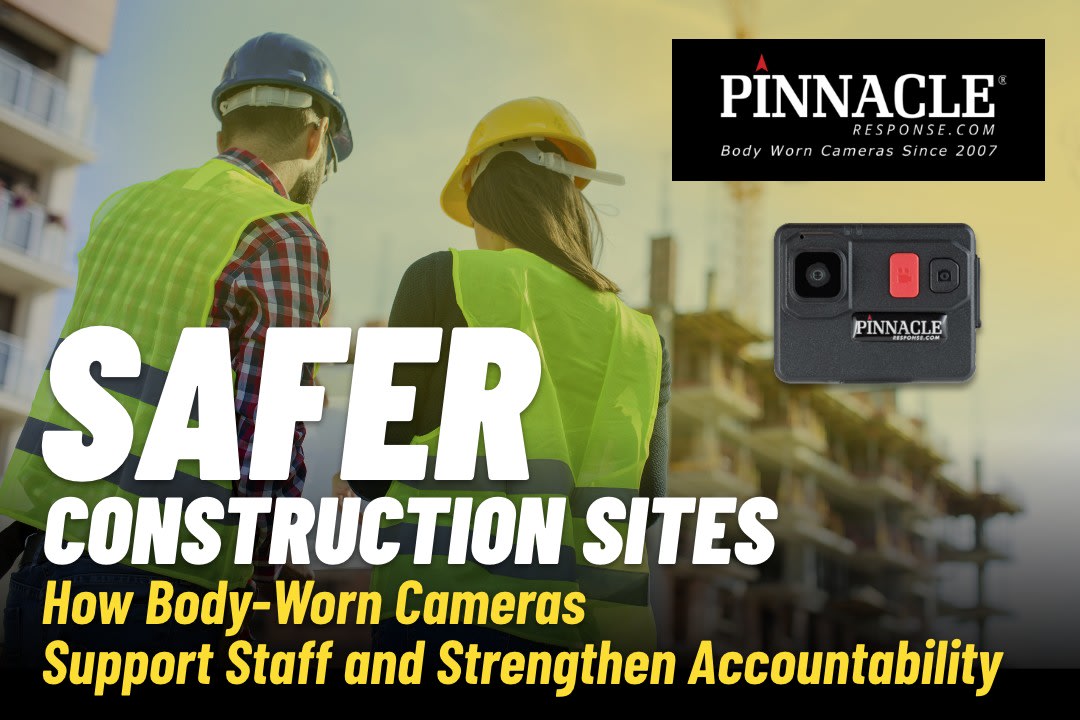
Construction, civil engineering and highway maintenance teams operate in complex environments.
Employees and contractors may work around heavy equipment, moving traffic and members of the public while managing strict operational and safety requirements. Supervisors can also be responsible for multiple teams, subcontractors and locations.
When incidents or disputes occur in these environments, having an objective record of events can be extremely valuable.
Body-worn cameras provide construction and infrastructure organisations with an additional tool for supporting employees, documenting incidents and strengthening accountability.
Managing public-facing situations
Construction is not always thought of as a customer-facing industry, but many employees regularly interact with members of the public.
Highway maintenance crews, utilities teams and employees working around road closures or public spaces can encounter people frustrated by delays, restricted access or disruption.
Most interactions are straightforward, but some can become confrontational.
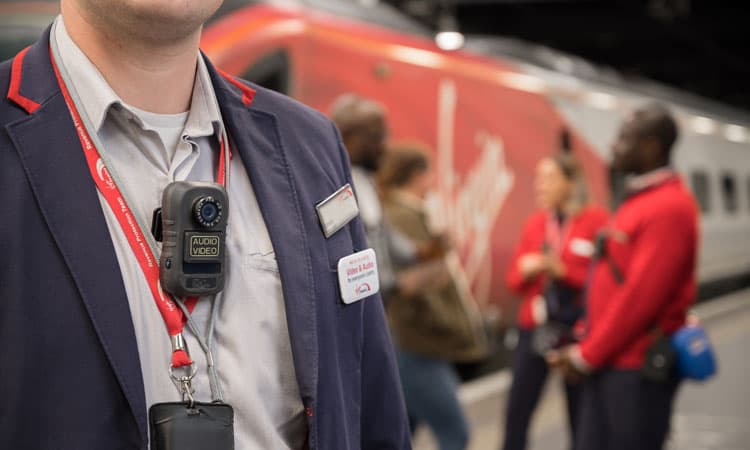
When activated in accordance with organisational policy, a body-worn camera can provide an objective audio-visual record of the interaction.
The visible presence of a camera can also make people aware that their behaviour may be recorded, potentially helping to de-escalate challenging situations.
Supporting employees working away from the office
Construction, engineering and maintenance employees frequently work across different locations rather than within a controlled workplace.
Some roles may involve employees working independently or in small teams in relatively isolated locations.
Body-worn video can provide an additional means of documenting incidents encountered during this type of work.
If a dispute, threat or other significant event occurs, the employee does not have to rely entirely on memory when subsequently reporting what happened.
Recorded footage can provide additional context for managers reviewing the event.
Providing an objective account
Worksites can involve employees, subcontractors, suppliers, clients and members of the public.
With so many parties potentially involved, accounts of an incident may differ.
Body-worn video can help establish a clearer record of what happened, when it happened and the circumstances surrounding an event.
This may support internal incident reviews, complaints handling and investigations where an objective account is beneficial.
Footage can also help protect employees against false or inaccurate allegations by providing evidence of the actual interaction.
Secure management of recorded footage
Recording an incident is only useful if the footage can subsequently be managed appropriately.
Pinnacle Response body-worn cameras integrate with our Digital Evidence Management System (DEMS), which enables authorised users to upload, tag, search, review and securely share recordings.
Metadata can be associated with footage, while manual tags and incident or case references can help organisations categorise recordings.
DEMS also maintains a searchable audit trail of activity surrounding footage, providing accountability over who has accessed, viewed, edited or shared material.
Choosing equipment for demanding environments
Construction and highway environments can be physically demanding, making camera durability an important consideration.
Pinnacle Response supplies the PR7 and PR8 body-worn cameras for construction, civil engineering and highway maintenance applications.
Both provide AES256 encryption, while their rugged designs are intended for professional operational environments. The PR8 additionally provides capabilities including 4G live streaming, 4G uploading and push-to-talk functionality for organisations requiring greater connectivity in the field.
The appropriate device will depend on the role, operational environment and wider requirements of the organisation.
Adding body-worn video to a wider safety strategy
Body-worn cameras should form part of a broader organisational approach that includes appropriate policies, training, risk assessment and incident-management procedures.
Their value lies in providing an additional layer of visibility and accountability when something happens.
For construction, civil engineering and highway maintenance organisations, that can mean better information following an incident, greater protection for employees and a clearer record when events need to be reviewed.
Pinnacle Response body-worn cameras are already deployed within the construction and infrastructure sector, supporting organisations operating in demanding environments across multiple locations.
If you would like Body-Worn Cameras for your company’s construction, civil engineering or highway maintenance teams then contact us for more information.
Tel: +44(0)2895320222
Email: sales@pinnacleresponse.com
- website-article100.


(4).png)


.jpg)
.png)
.png)

.png)

.png)