



One Organisation, Different Roles: Rethinking the One-Size-Fits-All Approach to Body-Worn Cameras
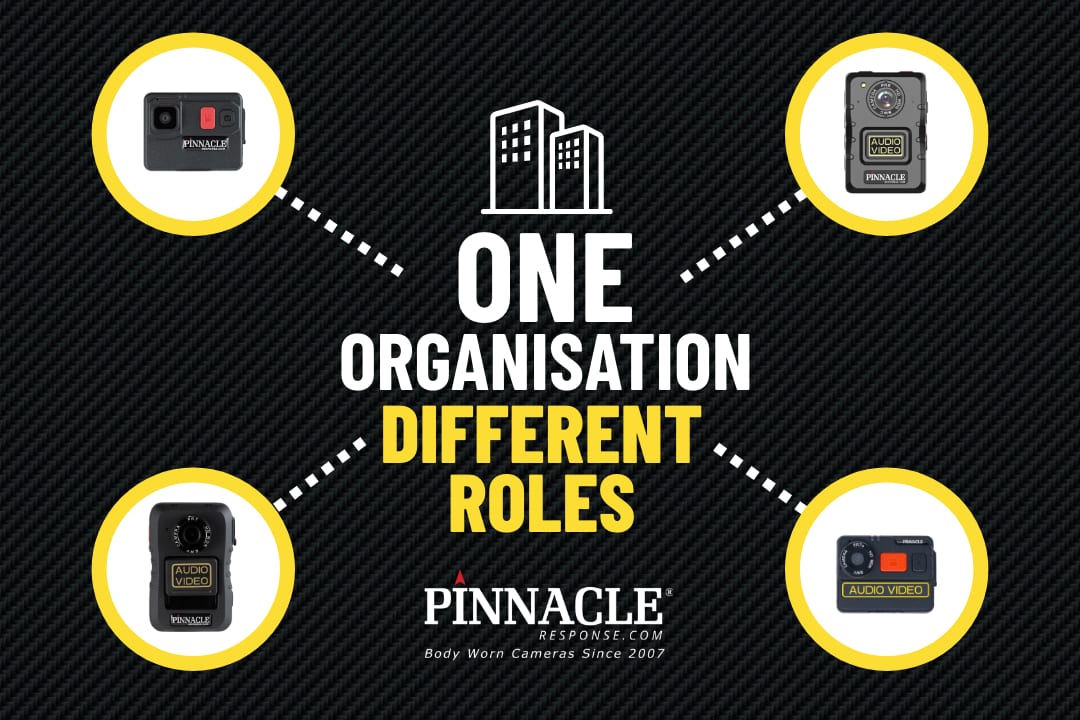
When an organisation begins planning a body-worn camera deployment, there can be a natural assumption that every employee needs the same device.
Sometimes that will be appropriate.
But large organisations can have very different frontline roles operating within the same workforce.
An employee based primarily in a customer-facing environment may have different requirements from someone working outdoors. A security response team may operate differently from employees carrying out routine customer service. A mobile supervisor may have requirements that do not apply to every camera wearer.
This raises an important question: Does every employee necessarily need exactly the same type of body-worn camera?
For some organisations, looking at requirements by role could provide a more effective starting point.
Different roles create different requirements
Consider a large organisation operating across several locations.
Its frontline workforce might include customer service employees, security personnel, mobile teams, supervisors, enforcement staff and employees working outdoors.
They may all benefit from body-worn video, but they do not necessarily use it in the same circumstances.
Understanding those differences can help an organisation determine what camera characteristics matter most to each part of its workforce.
Customer-facing roles: consider size and weight
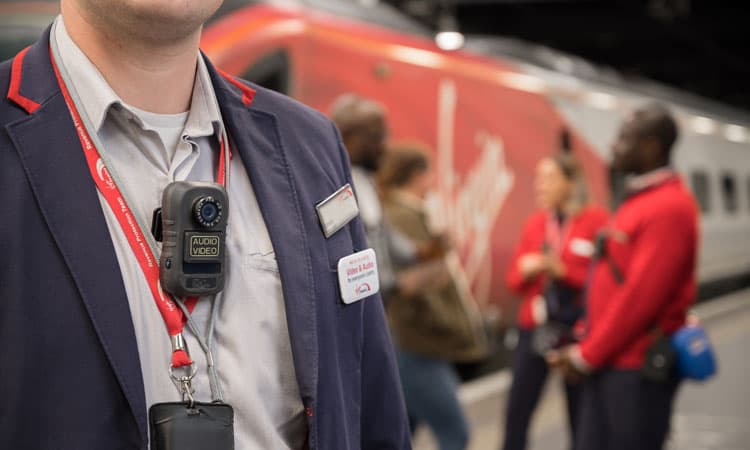
For employees who spend much of their working day interacting directly with customers or members of the public, a camera may need to be worn for extended periods.
Size and weight can therefore become important considerations.
Pinnacle Response's PR7 Mini and PR7 Mini+ have been developed as compact and lightweight options within the range.
At 75g, they provide a different form factor from Pinnacle's larger models.
For organisations assessing cameras for customer-facing teams, characteristics such as size, weight and ease of everyday wear may therefore deserve particular attention.
Demanding environments: consider durability
Other employees may work in significantly more demanding physical environments.
Outdoor operations, enforcement activities, waste and recycling, infrastructure, security and similar roles can expose equipment to weather, dust and physical impacts.
For these teams, organisations may place greater emphasis on environmental protection and robust construction.
The PR7 and PR8, for example, are IP66 rated and feature a tamperproof rubberised design.
The point is not that every employee working outdoors automatically requires a particular camera.
It is that the working environment should help determine the specification.
Connected teams: consider what needs to happen during an incident
Traditional body-worn video is primarily concerned with capturing a record that can subsequently be reviewed.
For some operational teams, organisations may also want additional connectivity during an incident.
Pinnacle Response's PR8 introduces capabilities including 4G live streaming, 4G uploading, push-to-talk and SOS.
These features create different operational possibilities from a camera being used primarily for local recording.
For example, where an organisation has an appropriate operational requirement, live streaming can allow authorised personnel to view footage remotely while an incident is developing.
Push-to-talk introduces another communication capability, while SOS provides an additional feature for escalation.
These capabilities will not be necessary for every employee.
And that is precisely the point.
A procurement strategy can consider which roles genuinely require advanced connected functionality rather than assuming every user has identical requirements.
Recording requirements can vary too
Another difference between roles is how cameras are likely to be used throughout the working day.
Some employees may encounter relatively few situations requiring recording.
Others may operate in environments where cameras are activated more frequently.
Expected recording requirements, shift length and charging arrangements should therefore form part of the assessment.
Across Pinnacle Response's current range, recording time varies between models, providing organisations with different options depending on their operational requirements.
Think about deployment at workforce level
For larger deployments, it can be useful to map body-worn video requirements across the workforce before selecting equipment.
That could involve considering:
- Who will wear a camera?
- Where will they work?
- How long will devices typically be worn?
- What environmental conditions will they encounter?
- How frequently is recording likely to be required?
- Do particular teams require additional connectivity or communication capabilities?
- How will footage be uploaded and managed?
This creates a requirements-led approach to procurement.
Instead of beginning with: "Which camera should we buy?"
The organisation begins with: "What do our different frontline teams actually need?"
The answer can then inform camera selection.
Standardisation still matters
A role-based approach does not mean creating unnecessary complexity.
Standardisation can bring important operational benefits, including simpler training, equipment management and support.
The objective is therefore not to give every employee a different camera.
It is to determine whether there are meaningful operational differences between groups of users and, where there are, whether those differences justify different equipment.
A well-planned deployment can balance standardisation with the specific needs of particular teams.
One body-worn video ecosystem, multiple requirements
This approach is particularly relevant as body-worn video becomes established across larger and more complex organisations.
The conversation is no longer simply about putting a camera on an employee.
It is about designing a body-worn video system that fits the way an organisation actually operates.
Pinnacle Response's range reflects these differing requirements.
The PR7 provides a rugged professional body-worn camera platform. The PR7 Mini and PR7 Mini+ provide compact, lightweight alternatives. The PR8 extends the range with advanced connected capabilities including 4G live streaming, 4G uploading, push-to-talk and SOS.
All these sit within Pinnacle Response's wider professional body-worn video offering, allowing organisations to consider different camera requirements while maintaining a consistent approach to footage management.
Build the Deployment Around Your People
Body-worn camera procurement should not begin with technology for technology's sake.
It should begin with the people who will use it.
Understanding their roles, environments and operational requirements can help organisations make better-informed decisions about the equipment they deploy.
For some organisations, one camera model may be appropriate across the workforce.
For others, different frontline teams may benefit from different characteristics while remaining part of the same overall body-worn video strategy.
Pinnacle Response works with organisations across a wide range of professional sectors to identify body-worn video solutions suited to real operational environments.
Contact Pinnacle Response to discuss your frontline requirements and the body-worn camera options available for your organisation.
Tel: +44(0)2895320222
Email: sales@pinnacleresponse.com
- one-organisation-different-roles

(4).png)
.jpg)
.png)
.png)

.png)

.png)