



How Stadiums and Arenas Use Body Cameras to Improve Safety on Event Days
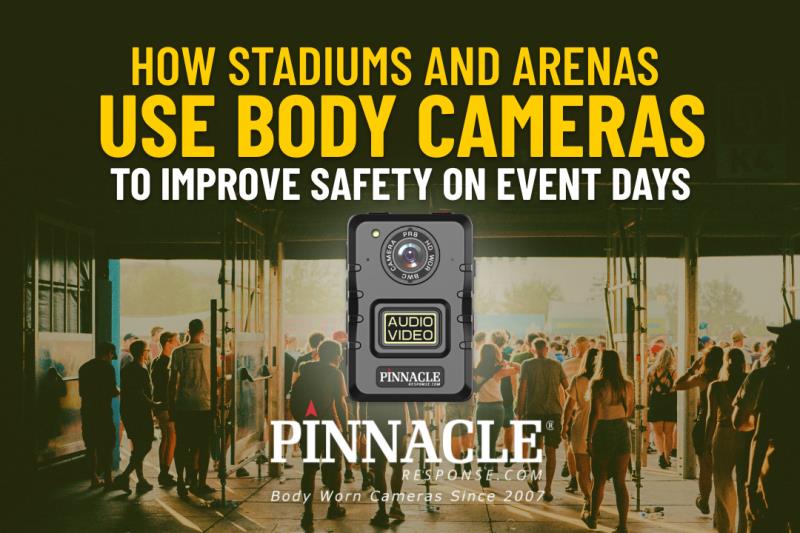
Stadiums and arenas are some of the most demanding environments for security and event operations teams. On match days, concert nights, and major live events, thousands of people arrive, move through confined spaces, queue at entry points, gather in concourses, and interact with stewards, security teams, hospitality staff, contractors, and emergency responders.
Most event days run smoothly. But when incidents do occur, they can develop quickly. A disagreement at a turnstile, anti-social behaviour in the stands, crowd congestion, a medical emergency, or a dispute between spectators can all place pressure on staff who are expected to respond professionally, calmly, and effectively.
That is why more stadiums and arenas are adopting body-worn cameras as part of their event-day safety strategy.
Body cameras are not just about recording footage after an incident has happened. Used correctly, they help deter poor behaviour, support staff confidence, improve communication, strengthen incident reporting, and give control rooms better visibility of what is happening across a busy venue.
Supporting staff on the frontline
Event staff are often the first point of contact for members of the public. They may be checking tickets, directing crowds, managing access points, dealing with complaints, supporting vulnerable visitors, or responding to behaviour that could affect the safety and enjoyment of others.
In these situations, a body-worn camera provides an objective record of interactions. This helps protect staff from false allegations, supports accurate reporting, and encourages greater professionalism on both sides of an interaction.
The presence of a visible camera can also have a calming effect. When individuals know their behaviour may be recorded, they are often less likely to become aggressive or abusive. For stewards and security personnel, this can make a significant difference in high-pressure situations where de-escalation is the preferred outcome.
Deterring anti-social behaviour
Stadiums and arenas are designed to bring people together, but large crowds, alcohol, rivalry, frustration, and high emotions can sometimes create challenging situations.
Body-worn cameras help venues take a proactive approach to safety. Their visible presence can help deter anti-social behaviour before it escalates, particularly in areas such as entrances, concourses, hospitality zones, seating sections, fan zones, and transport links around the venue.
For security teams, this provides an additional layer of reassurance. Staff can continue to engage with visitors while knowing that key interactions are being captured clearly and securely.
Real-time visibility with the PR8
One of the reasons the Pinnacle Response PR8 is particularly well suited to stadiums and arenas is its live streaming capability.
During a major event, control rooms need fast, accurate information. Radio updates are useful, but they can only describe what a member of staff is seeing. Live streaming allows authorised personnel to view situations in real time, helping supervisors and control room teams understand the scale, urgency, and location of an incident more clearly.
This can support better decision-making during situations such as crowd build-up, ejections, disorder, medical incidents, access control issues, or emergency responses. Instead of relying solely on verbal updates, control room teams can assess live footage and coordinate resources more effectively.
The PR8 also includes push-to-talk functionality, which can support communication between staff on the ground and colleagues managing wider operations. In a large venue, where teams may be spread across multiple entrances, stands, concourses, car parks, and back-of-house areas, clear communication is essential.
By combining body-worn video, live streaming, and push-to-talk, the PR8 helps bridge the gap between frontline response and centralised event control.
Better evidence when incidents occur
Even with strong planning and experienced staff, incidents can still happen. When they do, accurate evidence is essential.
Body-worn camera footage can provide a clear account of what happened, when it happened, who was involved, and how staff responded. This can be invaluable when reviewing complaints, supporting internal investigations, assisting law enforcement, or improving future event-day procedures.
Unlike written reports alone, video footage captures context. It can show the tone of an interaction, the behaviour of those involved, the actions taken by staff, and the environment around the incident. This helps venues make fairer, more informed decisions after the event.
Improving coordination across busy venues
A stadium or arena is not one single operating area. It is a network of entrances, corridors, seating sections, hospitality suites, retail areas, security posts, medical points, service routes, and control spaces.
During a live event, teams need to work together quickly. Body cameras can support that coordination by helping staff capture and share information more effectively. With advanced camera features such as live streaming, control rooms can gain a clearer picture of what is happening on the ground and deploy the right support to the right location.
This is especially valuable when incidents are developing quickly or when multiple teams are involved, such as security, stewards, medical staff, police, transport partners, and venue management.
Supporting transparency and accountability
Modern venues are expected to deliver safe, professional, and well-managed experiences for visitors, staff, performers, athletes, and contractors. Transparency is a key part of that responsibility.
Body-worn cameras help demonstrate that staff are acting appropriately and that incidents are being managed in line with venue procedures. They provide reassurance to the public while also helping organisations maintain high operational standards.
For staff, cameras can also provide confidence. Knowing that interactions are being recorded can help employees feel supported when dealing with difficult or unpredictable situations.
Secure footage management after the event
Capturing footage is only one part of the process. Venues also need a secure and reliable way to store, review, manage, and share footage when required.
Pinnacle Response cameras integrate with the Digital Evidence Management System, allowing footage to be uploaded, tagged, reviewed, retained, and shared securely. This supports clear audit trails, evidential integrity, and structured incident management after an event.
For stadiums and arenas, this means footage can be managed properly as part of wider security, compliance, and operational review processes.
A safer experience for staff and visitors
Body-worn cameras are becoming an increasingly important tool for stadiums and arenas because they support the people responsible for keeping event days safe.
They help deter anti-social behaviour, protect frontline staff, provide reliable evidence, improve communication, and give control rooms greater visibility when incidents occur.
For venues looking to strengthen their event-day operations, the Pinnacle Response PR8 offers a powerful solution. With live streaming, push-to-talk, secure recording, and robust body-worn camera capability, it is designed to support teams working in fast-moving, high-pressure environments.
As stadiums and arenas continue to welcome thousands of visitors through their doors, body-worn technology has an important role to play in creating safer, more transparent, and better-managed events for everyone.


(4).png)


.jpg)
.png)
.png)

.png)

.png)