



Beyond the Specification Sheet: 6 Things That Really Matter in a Body-Worn Camera
Comparing body-worn cameras can quickly become a comparison of numbers.
Recording resolution. Battery life. Weight. Dimensions. IP ratings. Storage. Connectivity.
All of these specifications matter.
But a body-worn camera is not simply another piece of technology sitting on a desk. It is equipment that frontline employees may need to wear, activate and rely upon during demanding working situations.
That means organisations should look beyond the specification sheet and consider what those specifications mean in practice.
Here are six areas worth considering when selecting body-worn cameras for a professional deployment.
1. Size and weight
A few millimetres or grams may not appear particularly significant when comparing cameras on paper.
For the person actually wearing the device during a shift, however, size and weight can become much more noticeable.
This is particularly relevant where cameras are worn for extended periods or where employees already carry other equipment.
Different operational roles can also have different requirements.
Some organisations may prioritise a smaller and lighter camera for employees working in customer-facing environments. Others may require a more substantial device designed around the demands of a different operational setting.
Rather than simply asking which camera is smallest, procurement teams should ask: What is appropriate for the person who will actually be wearing it?
2. Recording time
Battery and recording performance are fundamental considerations for any body-worn camera deployment.
The important question, however, is not necessarily which camera has the largest number on its specification sheet.
It is whether its recording capability matches the organisation's expected usage.
- How long are employees' shifts?
- How frequently are cameras likely to be activated?
- How will devices be charged between shifts?
- Will cameras be shared between users?
Answering these questions helps organisations match camera capabilities to real operational requirements rather than purchasing on specifications alone.
Within the Pinnacle Response range, for example, recording time varies by model, reflecting the different design and operational characteristics of each camera.
3. Ease of activation
Incidents do not wait while an employee navigates complicated controls.
When a situation develops, employees need to be able to operate their equipment quickly and confidently.
Camera activation is therefore an important consideration.
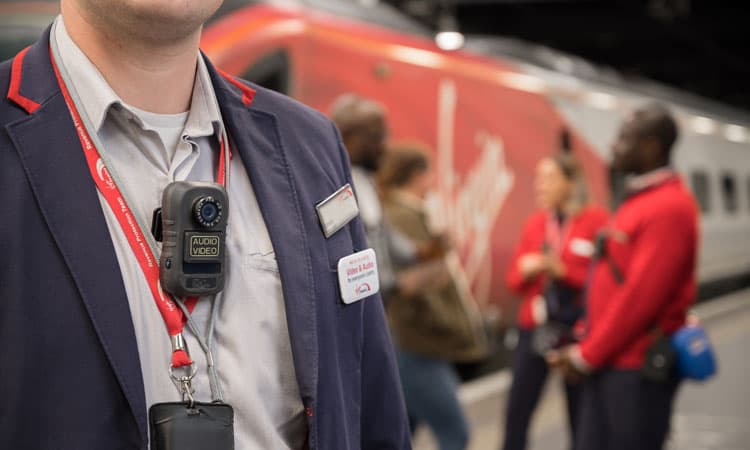
Organisations should think about how a camera will be used in real-world situations, including when the wearer may be moving, communicating with another person or responding to a rapidly developing incident.
Simple operation can also make training easier and help employees become confident using the equipment as part of their normal role.
The objective should be straightforward: when recording is required, the technology should support the employee rather than become another thing they need to think about.
4. Durability and environmental protection
A camera used in an office reception and a camera worn by an employee working outdoors may face very different conditions.
Body-worn cameras can be exposed to rain, dust, movement, knocks and drops as part of normal operational use.
This makes environmental protection and physical durability important considerations.
IP ratings can provide useful information about resistance to water and dust, while drop-test performance provides another indication of how a device has been designed to withstand physical impacts.
Pinnacle Response's professional camera range includes IP65 and IP66 rated models, allowing organisations to consider the level of environmental protection appropriate for different deployments.
Again, the objective should not simply be to select the largest number.
It should be to match the equipment to the environment in which it will actually operate.
5. Performance in different lighting conditions
Frontline operations do not always take place in perfectly illuminated environments.
Security personnel may work at night. Transport employees may move between brightly lit and darker areas. Facilities teams may work throughout large buildings. Enforcement personnel may operate outdoors at different times of day.
Low-light performance should therefore form part of an organisation's camera assessment where these conditions are relevant.
Pinnacle Response cameras include enhanced low-light capture, helping support recording across a range of operational environments.
Understanding where employees are likely to use their cameras can help determine how important this capability will be within a particular deployment.
6. How the camera fits into the wider system
The camera itself is only one part of a professional body-worn video solution.
Once footage has been recorded, organisations also need to consider how that footage gets off the camera and what happens to it afterwards:
- How will recordings be uploaded?
- How will users and footage be identified?
- Who can access recordings?
- How will evidential footage be retained?
- Can access and sharing activity be audited?
Pinnacle Response cameras integrate with its Digital Evidence Management System (DEMS), which provides functionality for uploading, tagging, searching, retaining and securely sharing recordings.
Considering the complete workflow at the procurement stage can prevent organisations from treating footage management as an afterthought.
Start with the operational requirement
There is no single specification that determines whether a body-worn camera is suitable for an organisation.
A lighter camera isn't automatically better.
A longer recording time isn't automatically better.
A more feature-rich camera isn't automatically better.
The appropriate solution depends on who will use the device, where they will use it and what the organisation needs the overall body-worn video system to achieve.
That is why procurement should begin with the operational requirement rather than the specification sheet.
Once those requirements are clear, specifications become much more useful: they allow organisations to identify equipment designed for the environment, employees and workflows involved.
Finding the Right Body-Worn Camera for Your Organisation
Pinnacle Response designs and manufactures a range of professional body-worn cameras for organisations operating across sectors including transport, healthcare, retail, local government, security, facilities management and more.
From compact and lightweight devices to rugged cameras and advanced connected solutions, the range enables organisations to select technology according to their operational requirements.
Contact Pinnacle Response to discuss the requirements of your organisation and identify the most appropriate body-worn video solution for your frontline teams.
Tel: +44(0)2895320222
Email: sales@pinnacleresponse.com
- beyond-the-specification

(4).png)

.jpg)
.png)
.png)

.png)

.png)